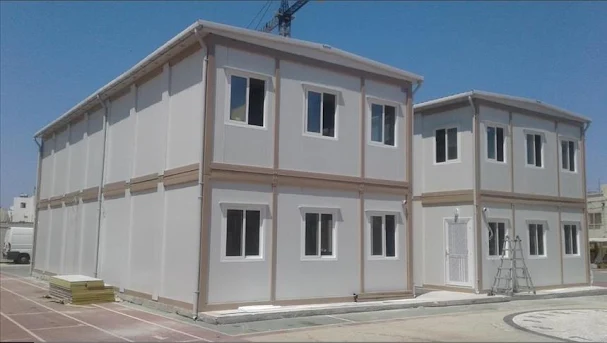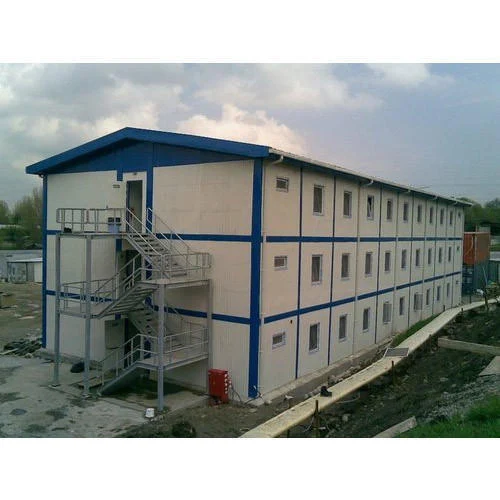
Prefabrication As A Viable Alternative To Make Building Construction Possible During Winter

 Winter and wet weather delays are common occurrences which disrupt the pace, productivity and overall efficiency of a building construction project. India faces a rigorous onset of monsoon which can hinder the ongoing urbanization waves as well as harsh inters across the northern regions with heavy snowing in a few states.              

The traditional brick and mortar or concrete construction technologies are not feasible for winter weather months owing to it he proper curing requisites for the mortar as well as the risk of consistent halts in projects, an off-site building construction solution such as Prefabricated House Construction is a viable option to practice.                   

The flaws with traditional construction methodologies during winter seasons    

Severely plagued by the harsh and adverse weather conditions occurring during winter, traditional building construction processes are risked of material damage and consistent weather delays during extreme cold temperatures. The moisture caused due to wet weather and even snowing can cause wood to warp, cement failure to bond or set property molding risks for interiors as well as prolonged drying periods for wet mixture plasters, mortar or even flooring.        


Thus, sticking with conventional construction methods during rain or snow can risk optimum structural integrity of a building and result in severe material losses, need of repairs and elevated risks of quality inconsistencies.          

Prefabrication as an all-weather safe construction methodology feasible for winter infrastructure development       

Opting for prefabrication to build homes, office buildings, schools, industrial enclosures or Prefabricated Farmhouse structures makes literally no impact on the quality, performance or safety of the project as well as the structure whether you build in winter snow or rain.       

The modular off-site construction of prefabricated enclosures is an efficient and safe process to follow during winters. The wide array of aspects associated with building construction which are vulnerable to cold weather can best be controlled and optimized by off-site construction technology.      

An optimum construction method for projects that span the winter season              

Following the right preferences of build methodology, you can save time, costs, materials as well as hassles on winter construction projects. Modular and off-site based Prefabricated House Construction keeps the project timelines on pace even during winter weather and prevents any structural quality and safety anomalies in the build.      


Stated below are the reasons why prefabrication is ideal for wet weather and winter season construction -         

  • Prefabricating involves use of steel frames and steel enveloped insulated panels which ensure better winter performance        


  • Off-site manufacturing and on-site installation of Prefabricated Farmhouse and building structures is not restricted by winter weather conditions      


  • No special measures are required for prefabricated construction during cold temperatures     


  • EPACK prefabrication technology makes possible multi-season infrastructure development consistency       


  • Prefabricated Farmhouse structures support a wide range of exterior cladding      


  • Off-site modular building development offers workers comfortable work environments        

Snow, rain, freezing cold or even extreme humidity cannot deter you from achieving peak quality features when you opt for Prefabricated House Construction from EPACK.               

Earthquake and Seismic Forces Performance from Prefabricated Building Enclosures


Over the past few decades, the construction industry has faced a major revolution and has been adopting innovative upgrades which intend to streamline the progress and relevance of the processes. By following alternatives for traditional building development processes, it becomes possible to cherish a renewed boost of performance, efficiency, quality, affordability as well as safety from the technology.          

The steadfast progress of the infrastructure development sector is being strived at not only a swift pace, but with an uncompromised endeavour which favours quality and safety upgrades from the sector. The conventional building structures follow design and development of a wide array of structural types with use of traditional materials such as brick and mortar or concrete, wood, steel etc. While these have faced a major test of times and with major progress being observed across all other industries, it is the high time to push forward innovation and quality enhancement in building construction with use of suitable alternatives such as prefabrication technology.  


High seismic resistance and earthquake safe performance of prefabricated structures        

The environmental changes have resulted in earthquakes and calamities to be more frequent. The best method to alleviate any risks is to introduce earthquake resistant features in buildings which enormously enhance the chances of survival of the structure. By enabling lightweight construction alternatives, the drastic shaking and shattering that occurs due to seismic forces can be effectively alleviated.               

The fabrication shed enclosure as designed and developed by EPACK is typically 5 times lighter than traditionally developed concrete or brick and mortar buildings. The use of metal framing for prefab buildings enables complete absorption of the seismic forces and earthquake energy which saves the structure and its occupants in times of such calamities. As one of the most significant safety features against an earthquake is to minimize building loads, prefab shed enclosures are rated best in that regard.           

Prefabrication as a reliable, safe and high-quality alternative to conventional construction methodologies 

A fabrication shed or a prefab modular structure enclosure is designed to be safe, sustainable and highly efficient as well as durable. It ranks as a better construction method across all the quality, performance and safety parameters. Offering a wide range of benefits with being cost-efficient, flexible, durable, swift and energy efficient, prefabrication technology has introduced cutting-edge construction solutions which delivers building enclosure that come with the following features -        

  • Swift construction process     

Prefabrication offers a quick construction process and being conducted off-site, this method is independent from weather enforced delays as well as resource supply anomalies. It is estimated that prefabrication construction processes lead to time savings as high as 45% when compared to conventional methodologies.         

  • Higher safety features     

The prefab building enclosures and prefabricated shed manufacturing offers structures which are exceptionally lightweight. This reduces the load on the supporting members significantly making the structure safe against natural calamities. Moreover, these enclosures are deigned to be fire resistant, corrosion safe, wind resistant and earthquake safe.      


  • Ultimate durability and longevity           

Wirth a structure designed to sustain heavy loads and materials used being exceptionally high-quality, prefabrication guarantees unrivalled d strength, durability and ,longevity standards. Also, a fabrication shed structure is engineered to withstand any climate.    

  • Sustainable and green       

With prefab shed manufacturing, it becomes possible to reuse almost 70% of the building material, which means that this construction method is environmentally friendly and highly sustainable.         

EPACK is accoladed as the top prefab shed manufacturing company and offers earthquake resistant structures with superlative quality features.        

Prefabrication Technology and It Impact on the Production Quality in Pharmaceutical and Electronics Industries

Infrastructure is the backbone of the industrial sector and setting up of factory enclosures, manufacturing facilities, warehouses, production and testing centres along with quality inspection buildings all results in the overall efficiency as well as production quality of the sector.         

The level of precision and ergonomic balance of the infrastructure for production centres can be a major determinant of the overall quality of the products being manufactured in the same. As there is a huge percentage of the effect of the environment in which a product is being developed on its final finishing and performance, it makes prominent the need of superlative quality facilities where in enhanced standards of sterility, ergonomics, balance and efficiency can be maintained.        

Maintaining optimum sterility and safety for research and production involving contamination sensitive equipment and items        

The most prominent sectors with an unparalleled influence from the levels of sterility and cleanliness are the pharmaceutical and micro-electronics industries. While one is indulged in research and development initiatives for producing life-saving drugs and essential medical equipment, the other has a prime imperative nature of manufacturing the most sensitive electronic equipment and items such as semiconductors, diodes, sensors and much more.      

Production of such sensitive elements which demands an uncompromised maintenance of 100% sterility and optimum temperature control along with ideal acoustic insulation can be optimized only by enabling use of high quality prefabricated clean room enclosures.        

The clean room enclosures and sterile chambers have an unrivalled demand for use in pharmaceutical industry, food testing laboratories, micro-electronics manufacturing, electronics packaging units, food processing companies and myriad other commercial demands. These have also become popular in scientific research and testing laboratories wherein even the slightest of contamination or humidly can be a negative influence on the final test results.          

Why opt for EPACK manufactured electronics industry and pharmaceutical clean room enclosures?             

Being a popular choice for avail of clean room for India’s leading electronics manufacturers, pharmaceutical industries, research institutes as well as many other key industry players, EPACK prefabricated clean room solutions have become synonymous with supreme quality features and flawless performance.   

Some of the top features of these clean room enclosures include -        

  • In-house design and engineering of clean rooms enables best serving of client specific solutions    
  • Availability of a comprehensive range of clean room wall, floor and roofing panel solutions  
  • Over two decades of industry defining expertise as a top pharmaceutical clean room manufacturer and supplier in India           
  • Greater speed to market with zero quality compromise         
  • An efficient and clean installation with minimum wastage assurance         
  • A complete flexibility of design to make possible expansion and modifications of the prefabricated clean room enclosures          
  • Reduced construction time frames allowing for swift project delivery      
  • Superlative standards of temperature control, humidity maintenance, acoustic insulation and leakproof construction made possible by use of composite sandwich panels    

Visit https://www.epack.in/clean-room to learn more about EPACK prefabricatedclean room solutions.      

Off-Site Construction from Prefabrication to Enhance Worker Health and Safety Conditions

Infrastructure development and construction is a demanding industry and the tasks involved with the same can be physically and mentally challenging for the workers. Construction industry has traditionally been notorious for risking worker safety and ensuring optimum working conditions is always the number one priority for any project.      

The safety of the site workers in construction is the most critical element of any infrastructure development project and an uncompromised factor that needs to be rigorously adhered to.     

It is unfortunate that with an excessive focus on speed and cost-savings in construction, the safety of workers gets side lined and this poses a huge risk to their health. As construction projects involve handling heavy objects and working at heights or in equally demanding conditions, the risks must be alleviated by following proper health and safety protocols.      

One of the best means to mitigate concerns of worker risks in construction is by taking the entire project to an off-site build facility wherein better standards of safety and risk prevention can be enforced without any compromise to the build quality, speed or costs.      

Experience enhanced construction project safety with prefabrication technology     

The technology associated with prefabrication building construction involves manufacturing ither the entire building structure of individual parts of it at an off-site quality-controlled facility. Such a methodology makes possible a strict adherence to health and safety standards.  

Traditional building construction processes pose serious risks to workers as an onsite build involves a vast range of unknowns and it is impossible to enforce better standards of risk mitigations owing to the every-dynamic conditions as posed by the environment and weather.     

On the other hand, construction of telecomshelter enclosures, commercial infrastructure, residential buildings and industrial facilities by prefabrication methodology reduces wastage, requires minimal worker time onsite, exposes workers to fewer vehicle movements and also reduces exposure to emissions considerably. Adding to the list, off-site building construction makes possible a rigorous quality control and safety adherence with a standardised manufacturing model.    


Here is how prefabrication build is much safer for workers as compared to traditional methodologies - 

  • Factory conditions enable better management of health and safety risks     
  • Off-site building development minimizes worker exposure to harsh outdoors
  • With works unaffected by weather, there is less risks of slips, falls and tripping  
  • Prefabrication alleviates the need of scaffolding at site thus preventing risks of falls    
  • Indoor sites for prefabrication are generally calmer and more convenient     
  • Off-site construction involves advanced machine use thus minimising labour-intensive works      
  • Dedicated supervisors manage and monitor the health and safety protocols constantly      

EPACK as the leading railway sheltermanufacturer in India adheres to strict standards of quality control as well as health and safety at its state-of-the-art facilities that are equipped with all the requisite safety devices and measures.               

Can Prefabrication be an Effective Response Against the Traditional Flaws in Construction and Help Deliver Better Solutions?

Notorious for a wide variety of reasons ranging form cost overruns, time delays and safety concerns, the construction sector has been heavily criticized as an industry with inconsiderate measures for enhancement of quality, efficiency and sustainability.      

Traditional construction is a broken process with an imperative requisite of an all-scale enhancement and technology integration which allows better control and efficiency at each and every stage of the development process.       

There is an omnipresent lower productivity and higher environmental risks from all types construction initiatives following conventional methodologies. While one might argue that the infrastructure development sector is growing at a higher rate consistently every year, but quantity doesn’t necessarily imply a better quality and this is true with conventional infrastructure development strategies.      

Despite the rise of economies in construction, there is also a rise in costs, wastage generation, demand of manual labor as well as frequencies of time delays. To counter such anomalies, a future-ready solution which makes construction processes more efficient and cost-effective is an essential requisite for the value chain.         

Some numbers and figures pointing to the broken process of traditional construction      

It is notable that a majority of construction process we witness today have remained unchanged at the core from many decades. While use of heavy machinery has enabled an enhancement in pace of the projects and computer aided design delivers better precision, but the methodologies central to the process remain the same and so are the traditional vulnerabilities and flaws associated with them.        

On-site traditional or conventional methodologies of brick and mortar as well as concrete construction involve linear processes with each step of the project progress following the prior. This increases the risks of delays as any flaws in the prior processes can disrupt the entire progress of the processes to follow.   

The weather conditions, labor availability, supply shortages as well as regulatory compliance all pose a threat of delays in the process and thus hinder progress as well as productivity of the sector.     

Globally, an estimated 65% of all conventional construction projects face delays with around 15% of the projects facing budget overruns. It is also estimated that more than 80% of the structures have minor defects and around 50% show major flaws.     

The value addition for the construction sector has also remained very low at about 1% when compared to almost 5% for the manufacturing industry.         

Delivering better outcomes and optimum solutions to conventional flaws with off-site prefabrication construction            

Prefab or off-site construction moves the development process to an indoor facility where a factory manufacture type model is utilized to produce individual structural components which can be modular in nature and easily installed at the site or be pre-engineered components relocated to the actual site for assembling.           

A prefab multi-story building as developed by EPACK involves off-site construction which delivers the biggest two advantages in the form of higher quality control and better project pace.    

By being developed in a controlled environment, there is zero risk of weather or labor shortage related delays as the majority of processes are automated. Furthermore, development of prefabricated multi-storey office buildings, homes, commercial facilities as well as industrial enclosures eliminates any errors in design, allows better material efficiency, reduces wastage considerably and offers minimum disruption to the environment.         

Prefabrication also guarantees safer and healthier working environments and EPACK assures the best cost saving benefits from its solutions.         

Eliminating Construction Errors with Innovation from Prefabrication Technology

It is a popular saying that we learn from our mistakes. It holds true for most things in life. But while we learn from our faults, sometimes these mistakes can get a bit costly and become a burden on our finances.   

Mistakes that happen in building construction can cost you dearly and that too very fast! 

To accomplish the construction projects under or at par with the stipulated budgets and to avoid any delays in the same, preventing the occurrence of mistakes is a no-brainer strategy.

But involving a wide range of variables and uncontrolled factors, the traditional methods of construction technology are vulnerable to mistakes and take a toll on project times and costs as well.  

The vulnerability of errors for traditional building construction     

Having the right choice of resources, hiring a skilled workforce and even planning the tasks perfectly cannot hinder errors in conventional construction. The classic methods of building development rely on a vast range of unknown and unpredictable variables.   

These include factors such as weather, environmental conditions, logistics, simulated data and also traditional channels of communication. All these pose a greater risk of fault and failure even at the minutest of deviation from the optimum and thus the margins are very restricted. 

Smart solutions to prevent construction project errors       

Modern-age construction technology implementation in the form of prefabrication allows such high levels of quality control and scheduling precision which are unheard of with conventional methodologies.

EPACK as the top prefab office building manufacturer offers smart construction solutions with unrivalled features that ensure your project progress and delivery is never derailed. Involving advanced systems of precision designing, accurate planning, flawless production and rigorous testing, prefabricated building development enables a higher degree of accuracy and error-free progress which mitigates the flaws prominent in traditional methods.

A prefab office shed, factory enclosure or a prefabricated home all are designed and developed in controlled environments with a majority of tasks undertaken without any direct influence of outdoor condition variables.

The high-grade material use, advanced automation for manufacture as well as management, superlative precision in production and zero gaps in information sharing ensure that the project is accomplished on-time and in compliance with the set budgets.  

With an alleviation of the conventional inevitable factors in construction and involving minimal interaction with the site as majority tasks occur off-site, it is guaranteed that your building construction endeavors will stay on track of time as well as expenses.  

Precise data creation and monitoring enabled by digital technology use which is so prominent with prefabrication processes is a guaranteed strategy to eliminate construction disruptions of unforeseen costs.     

EPACK Prefab manufactures and supplies a wide range of prefabricated building solutions such as the prefab office shed which embodies a superlative set of quality features guaranteeing zero flaws in production, installation and performance as well.      

Construction: Prefabricated Systems Have a Bright Future Ahead of Them

The market for made-to-measure prefabrication systems is growing, bringing several benefits in terms of quality, precision, and speed of execution on-site, but this type of construction necessitates meticulous upstream planning.

The construction sector faces many challenges, with increased regulatory performance, a very competitive market with tight deadlines and budgets, increasingly complicated land in urban areas, and difficult access.

In this context, the dry sector and off-site sites are developing. Large and complex building elements are increasingly machined and assembled in a workshop or factory, up to complete pre-equipped 3D modules.

The benefits are numerous. Work in the warehouse building is easier to control in terms of quality and precision, generates less scrap and waste, can be recycled, and improves working conditions. The sites are cleaner, less noisy, more meticulous, and the time savings can be counted in months.

A varied architecture

Prefabrication can be used to generate complex shapes such as concrete shells or walls with curved or organic shapes and work certain materials under good reproducibility conditions such as stamped or architectural concretes, printed, or composite materials.

Modularity makes it possible to industrialize, therefore, to reduce costs for floors (honeycomb slabs, for example) or facade panels that incorporate numerous layers of insulation and waterproofing and joinery.

The 3D modules of rooms, kitchens, or bathrooms already equipped find a market for the elevations and collective residences, workers or migrants, and retirement homes. Prefabrication is also developing for electric and hydraulic octopuses.

Well-prepared projects

Prefabrication requires meticulous site preparation and cooperation from companies upstream to anticipate the passage of networks and cables, reservations, and openings. Using a collaborative BIM methodology around a digital model is particularly justified off-site.

The workshop or factory manufacturing by prefabricated warehouse manufacture, carried out in a controlled atmosphere, makes it possible to industrialize the process and automate with numerical control machines, robots, or 3D printers...

The quality is reproducible more easily for operations as diverse as welding, the casting of white concrete, the quality of the waterproofing of facade panels, etc. Regarding concrete, a current issue in prefabrication is also low carbon.

Prefabricated construction: the advantages in brief

Compared to the various conventional construction solutions, prefabricated construction is advantageous on four essential points:

  • Prefabricatedbuilding solutions offer real advantages in terms of savings, as the budget can be reduced by up to 30%.
  • In terms of speed, it is also clear that opting for prefabricated buildings can optimize more than 50% time savings compared to traditional construction.
  • In terms of modularity, tailor-made prefabricated constructions make it possible to foresee possibilities of extension for future development.
  • In terms of aesthetics, the architectural design is infinitely customizable, whether for the exterior, the colors, or the comfort...